







 February 12 2026
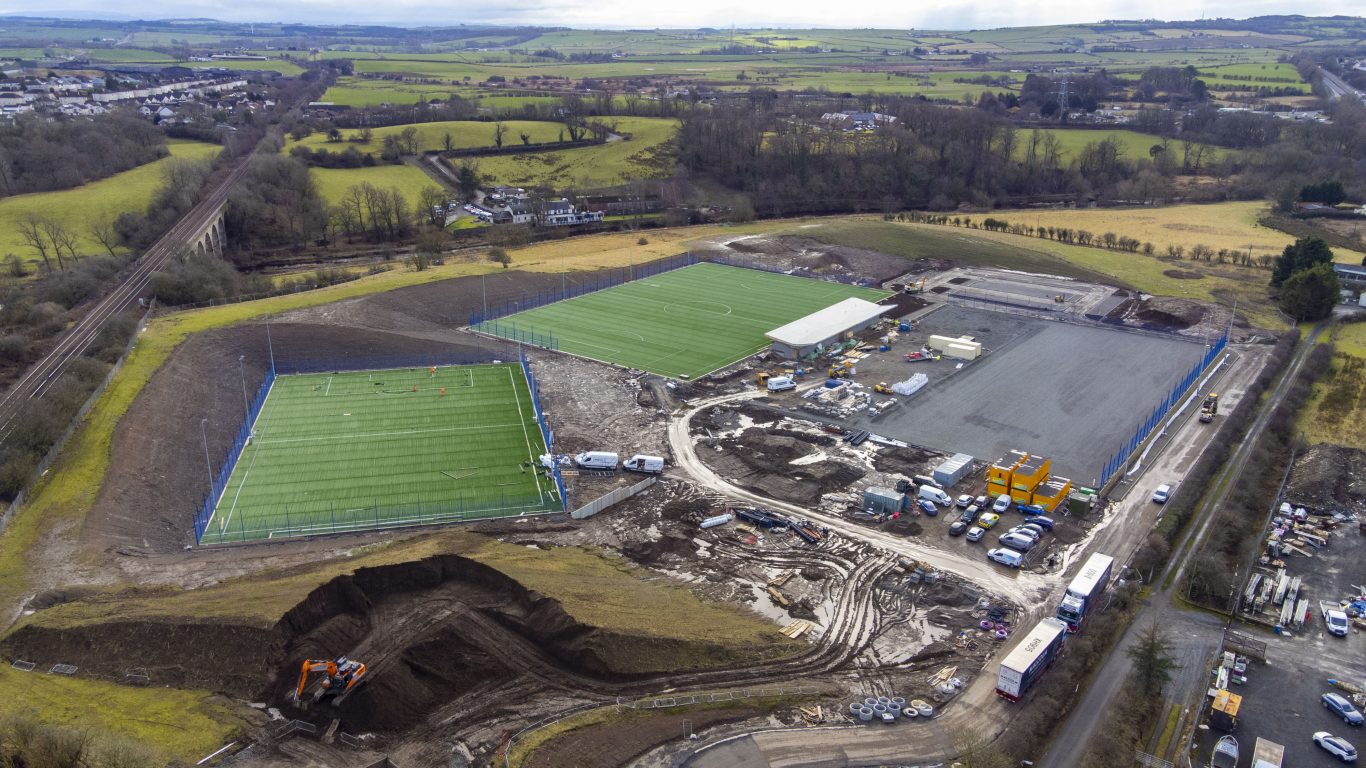
 Progress update: Bowie Park
When Billy Bowie first spoke publicly in late 2022 about investing £1.5 million in a new training ground for Kilmarnock FC, it was seen as a bold statement of intent.
Since then, that vision has continued to develop, with total investment now exceeding £7 million in a purpose built, not for profit training facility that places community connection at the centre of the club’s long-term strategy.
Billy’s association with Kilmarnock FC spans more than two decades. A local businessman with strong ties to the area, he began sponsoring the club in the late 1990s with the aim of giving back to the team and town that had played an important role in his life. His involvement increased over time, joining the Board in 2013 before becoming majority shareholder and owner in 2019. Since that point, ongoing investment delivered through Billy Bowie Special Projects has reflected both his commitment to the club and his belief in football’s wider social impact.
“This project has always been about more than just building a training ground,” said Billy Bowie. “From the outset, the aim was to create something that would benefit Kilmarnock FC for the long term while remaining firmly rooted in the local community.”
That approach is embedded in the development of Bowie Park. Located to the east of the A77 between Kilmarnock and Crookedholm, the site has been selected to ensure the club remains firmly rooted in its local surroundings. The facility is within walking distance of the town centre and is accessible by public transport, car and bicycle. Wider infrastructure improvements form a key part of the project, including a new access road, two digital bus stops and the restoration of the pedestrian river path linking Crookedholm with the Scott Ellis Recreation Ground, extending the benefits of the development beyond the training facility itself.
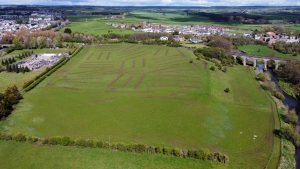
Stage 1 – April 2025
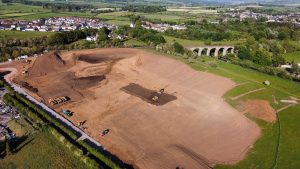
Stage 2 – May 2025
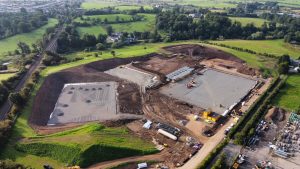
Stage 3 – August 2025
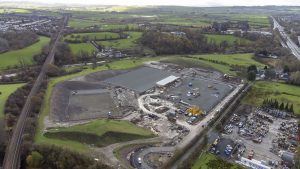
Stage 4 – November 2025
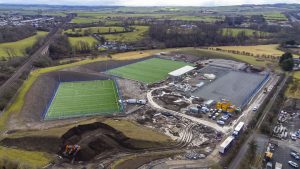
Stage 5 – February 2026
With construction progressing well, the first phase of the development is scheduled for completion by the end of May. This phase will deliver multiple full size artificial grass pitches, a nine a side pitch and a 250-seat stand. Importantly, Bowie Park is not intended to operate as a closed facility. Elements of the site will be made available for community use, with all income generated through hire or events reinvested directly into the facility to support its ongoing development and sustainability.
The development of Bowie Park will continue beyond the completion of Phase One, with plans in place for a second phase that will introduce a state-of-the-art training and performance facility. Further details will be confirmed later.
The delivery of the project has relied on strong collaboration across several partners.
Billy Bowie paid tribute to those involved, adding: “I would like to place on record my thanks to Malcolms as Principal Contractor and to Thomson Hunter Associates for their work on the design and delivery of the facility. Their professionalism and commitment throughout the project have been vital in turning what was an ambitious vision into a reality.”
The official opening, planned for the start of the new season, will mark the return of first team playing on natural grass at Rugby Park for the first time in more than a decade. It also brings elite football training back into the local area, strengthening the relationship between the club, its players and supporters. With a programme of community engagement already in development, Bowie Park is expected to become an active and shared resource from its opening.
The long-term benefits will extend beyond the current first team squad. One of the key objectives of the project is to support the development of future generations of players. By bringing the first team, academy squads and women’s team together on a single site, the club will create a daily environment focused on development, progression and opportunity. Young players will train in a professional setting, supported by experienced coaching staff, with clearer pathways towards senior football. For prospective players, coaches and staff, the facilities provide a clear signal of the club’s ambition, stability and long-term direction.
General Manager Gregg McEwan highlighted the importance of partnership working in bringing the project to fruition. “Projects of this scale do not progress without strong collaboration, and we are grateful for the constructive and supportive approach taken by East Ayrshire Council throughout the planning and development process,” he said. “Bowie Park represents a significant step forward for the club, not only in footballing terms but in how we continue to engage with and serve our community.”
Kilmarnock FC has evolved alongside its home throughout its history. Since the first match was played at Rugby Park in 1899, the stadium has adapted through periods of change in the game and beyond. It has hosted numerous landmark moments, from lifting the final Ayrshire Cup in 1998, to major live performances from Sir Elton John and Sir Rod Stewart, and most recently the club lifting the Championship trophy on home soil in 2022. Throughout that history, Rugby Park has remained a source of pride for the club and its community.
As the club looks ahead, Bowie Park represents the next phase in that journey. More than a training facility, it reflects a long-term investment in people, place and performance, reinforcing Kilmarnock FC’s position at the heart of its community and its commitment to a sustainable future.



